Monday, January 13, 2014

Healthcare Technology Should Be about Enabling, Not Replacing, People- why it's less about the app and more about the process.

My friend Lisa Suennen recently wrote a thoughtful review of the Computer Electronic Show (#CES) http://www.venturevalkyrie.com/2014/01/11/people-who-need-people-a-ces-follow-up-report/5961.  For those of you unfamiliar with the event, there were more than 2 million square feet of exhibits and roughly 150,000 people last week in Las Vegas.  Digital Health is part of a broader offering covering all things tech.  Amongst all these glittering objects, the of envy for any true geek, Lisa had several interesting observations.  First, that many health entrepreneurs are (as she notes, wrongly) looking for ways technology can replace people, rather than enable people.  There is a general sense that scale (a magic word for the investment community) requires fewer bodies.  Second in her opinion, the ultimate goal should be a mash up, a convergence of IT, devices and services for true value.  I couldn’t agree more.
My efforts focus on collaboration.  Within health IT is what seems obsession with data, EMR’s and dashboards, but for me the future is about teams- getting the right people at the right time to come together.  Without this opportunity for timely expertise and collaboration, the value of data decays.  Information has trouble converting to knowledge.  However, collaboration is messy.  It requires thoughtful consider of how people and process interact with technology.


Replacing the Pager with a PDA.

For decades the pager has been the official form for medical communication.  It is safe and secure.  It is also limited, inflexible and a poor choice for collaboration.  In response, many physicians have adopted texting as an alternative method of communication.  However, as of September 2013, new federal mandates limit texting.  There is a potential 50,000 penalty for texting a single instance of patient information being exposed in an standard text.  The response by many vendors has been ….I have an app for that, to wrap messages in a secure technology.  However, an effective solution needs to be far more nuanced.
In the consumer space, apps can go viral.  However, the social fabric and supporting infrastructure for healthcare presents a number of obstacles.  There is an assumption that all providers will have a PDA.  However, PDAs at work are expressly forbidden by many nursing regulations.  This means messaging must be cross platform.  What if an individual doesn’t want their PDA to be leverage for work responsibilities; is the hospital required to provide a device?  Many hospitals do not have have the necessary wireless/cellular infrastructure to support PDAs.  Most hospitals do not have accurate information on their providers beyond pager numbers and an office address; snail mail remains the de facto form of communication.  
For their part, physicians often do not want to be reach directly.  In part this is a workflow issue.  Imagine a physician is in surgery and receives a call telling a patient needs their attention immediately.  Do they leave the surgery, or stop the surgery and call someone to cover?  There are reasons for call centers.  Practically, there needs to be permissions set by time of day, availability and role for the collaborative communication to be appropriately routed.  This requires high level enrollment into a “service” identifying roles and managing preferences.
The result has been islands of communication.  Groups have adopted apps for internal communication but no real holistic community of providers for collaboration. With the help of a vendor (disclosure- I have invested in the company, #Emerge.MD), St. Joseph’s has deployed a technology enabled service helping people to collaborate.  This service enables provider collaboration by name (eg...Dr. Jones) or by role (neurosurgeon on call).  It incorporates nursing requirements (for desktop messaging) as well as physician preferences.  Via this service teams of people can be brought together text, voice or video.  Importantly, there is sponsorship from a business owner, the hospital and more broadly the Accountable Care Organization.  The executives have something to gain- more cost effective care (throughput issues, access to specialists, etc…). This solution is now spreading through Dignity Healthcare. However, this was not plug and play.  It required extensive knowledge about the people and process rather than strictly technology.   

Even replacing an archaic device, the pager, with a PDA is not about technology but rather about understanding and management of a constellation of social processes. At the end of the day, health and healthcare are personal.  There are many processes that can be automated and improved upon via technology.  But for my money, I am with Lisa.  Transformation will be more about enabling rather than replacing people.   And people require services, not technology.


Monday, December 16, 2013

The Doctor is Always Right- Except When They're Not- Bias, Myth and Paternalism in Medical Decisions

A friend of mine was kind enough to drive his 85 yo mother to get a colonoscopy.  She had a normal study 18 months before.  There was some evidence of minor bleeding & her doctor just wanted to be sure.  This meant the "prep," with instructions to drink the last bit at 3 am, followed by a trip to the doctor's office at 530 am.  Another friend was told they had melanoma.  As you might imagine, this caused concern.  The doctor recommended a biopsy followed by 2 additional surgeries.  When I asked what stage melanoma, I was told it was stage zero; in terms of danger, this is just above freckle, the lowest potential for growth.
Both examples represent common medical experiences. In each case, there was an alternative- do nothing. For the older woman, it was reasonable to ask what the doctor expected to find and, if bad, what would be done about it.  I personally want to die with an undiagnosed cancer.  In the second example, surgery for the “near benign” required pain, risk and expense.  If removing the lesion via biopsy gave a 98.5% chance of not getting the disease, were the 2 surgeries worth the incremental improvements?
Each situation gets to the heart of "consent."  Ideally every procedure offers the patient a real choice.  After explaining the risks, benefits and alternatives, the patient chooses to proceed.  However this is rarely done.   Bias, myth and, on some level, well meaning paternalism all play a role.  

Bias- Mental tendency or inclination, especially an irrational preference or prejudice

Imagine spending 20 years learning a trade.  It is natural to believe you are helping, not hurting.  Physician's believe in their art. To expect all options are equally considered, goes against human nature.

Myth- a widely held but false belief or idea.

Although medicine is shrouded in science, we often do what we do because we do them. Practice is passed on from generation to generation. Many things are taken as "truths," without any real justification.  A recent Mayo Clinic Proceedings reviewed reversal of a 146 contradicted medical practice (MCP, August 2013). Medical knowledge is purported to be based in science but in actuality, this often not the case.


Paternalism- Though I walk through the shadow of death, ...thou art with me, thy rod and staff to comfort me. Psalm 23:4
Rod of a healer

It is difficult for both providers and patients to have a conversations as equals.  For the patient fear and anxiety go hand and hand with illness.   This is overlooked by those thinking computers will replace providers in the near future.  Most patients do not want to make life threatening decisions alone.
Providers may feel pressed for time and a responsibility to act as a filter for their patients, leading them to the right choice.  Unfortunately, well meaning desire can often result in an unbalanced discussion.  
In Seinfeld, Elaine was blacklisted as a bad patient.

I should note that most providers are not consciously motivated by financial gain.  Yes, treatment results in payment, but the vast majority of people believe that they are offering the best option.


What to do…Ask- what are you getting for the risk, what is the downside to waiting?


With all these well meaning forces, I would suggest a relatively simple approach of asking and when possible, consider watchful waiting.  For many patients, asking is intimidating.  There is a fear asking will degrade the relationship.  Most physicians are willing to explain there reasoning; and if they won’t, get a second opinion. Definitive answers are not always the best answers.  Finally, ask the harm in waiting.   Avoiding risk today may be better than possible risk tomorrow.

Tuesday, December 10, 2013

HIT Implementation Challenges for Rural: Follow the bouncing ball!

Joe Wivoda, Chief Information Officer
Transforming any industry is challenging. Health care is going through a multidimensional transformation right now: Reimbursement changes from volume to value, increased focus on quality, and implementation of IT systems and meaningful use. Every hospital, clinic, skilled nursing facility, and indeed all health care providers are coping with these changes. Rural facilities share many of the same challenges as their urban counterparts, but there are some that are uniquely rural.

Providing patients with timely access to their health information, and getting sufficient numbers of them to view, download, or transmit their data, is a challenging meaningful use requirement. This is much less of a technological challenge, more of a marketing and patient engagement challenge. In a rural hospital or clinic, implementation of the patient portal can be challenging due to the lack of IT resources, and HIT vendors that focus on rural are often too busy to implement the portals early enough to build a patient engagement campaign. It takes time to engage patients and get them setup to log in to access their health information and it is important that rural providers engage their community as a whole. Discussing the benefits of online access to your health information on the radio and at public events will go a long way to get patients excited about being more involved in their care. Rural has a significant advantage here, primarily because they are so close to the community.

Participating in health information exchange, particularly state-based exchange, has been frustrating. Technological changes, unsustainable business models, and low adoption levels have kept state HIEs struggling. In addition, many HIEs have focused their efforts on capturing the urban hospitals and integrated delivery networks first, essentially putting rural on the back burner. Query-based HIE, as opposed to Direct Secure Messaging, is difficult to implement. Exchange is so important for Stage 2 of meaningful use, and for high quality and safe patient care, that it can not be ignored. Rural providers should look to Direct for being able to exchange with their referral partners while working with their local HIE for future query-based exchange.

Rural clinics and hospitals that do not have a culture of process improvement are at a significant disadvantage when implementing an EHR. All too often I visit rural facilities that have no established process improvement program. Based on my experience, this is the single most important thing to have when implementing an EHR. Without PI you will implement an EHR in a way that will likely decrease productivity, or worse, decrease patient safety. The EHR is not built with idealized processes "baked in", you need to do the work. Understand how you do things today, understand how the EHR works, design a new process. We like Lean as a methodology, but PDCA or others are valuable. Rural facilities, who are usually stretched for resources and have staff wearing many hats, need to make PI a core part of the culture. Urban hospitals and IDNs have been doing this for years, and CAHs that have embraced PI have been shown to be financially sound and their EHR implementations go much better with less fixing after the go live.

Rural has the ability to move quickly. These are challenges that can be overcome. Continuous process improvement, workflow analysis and redesign, should be central to not just the EHR implementation (or improvement) but to the operations as a whole. HIE, patient engagement, and improved utilization and efficiency from the EHR will follow once good process improvement activities are made central to the work.

What do you think are HIT implementation challenges in rural?

Tuesday, December 3, 2013

Congrats, You've won a shopping spree. Unfortunately, the stores are closing. Why you should worry about Medicare instead of Obamacare

After 30 years in healthcare, a someone finally explained Medicare to me.  Here is the short version. There are 4 parts (A,B,C, & D).  At 65 most Americans get parts A and B.  Part D is for drugs; the senior can be responsible for several thousand dollars/year.  Part C is the interesting one.  

"C" coverages lab, X-ray, hospitalizations, doctor visits, emergency transport- most things commonly thought of as healthcare.  You can choose to keep Part C which is free in most geographies or add a supplement reducing or eliminating co-pays.  Most seniors choose supplement plan "F."  For another $130/month (with the required $104 for Part B this brings the total to $235/month), the senior has access to any primary doctor or specialist, any hospital network accepting Medicare with no additional charges.  This is fantastic coverage.  I pay almost 10 times this amount and still have a deductible.  This is like a an unlimited shopping spree for a buck.  But unfortunately, many of the "healthcare" stores may be closing.
Here is the problem.  The healthcare costs a of money a lot more than $235/month.  The government has 2 choices.  Additional revenue could be raised, effectively charging seniors more for similar coverage.  This is DOA. Politicians like being politicians.  They, like most of us, think of themselves first.  Reducing entitlements, particularly Medicare, is suicide.  Alternatively, expenditures could be reduced.  This is what has been happening.  Hospitals, doctors, device manufacturers, labs, etc... are all being paid less.  
Although a popular public option, this may not be a good long term strategy.  Yes, the healthcare industry is bloated and mismanaged, but inefficiencies are not going to disappear easily.  As prices fall, businesses are going to fold- fewer hospitals, fewer doctors, less innovation.  I am not suggesting healthcare will disappear, but rather access will decline.  Like in any business without profit, store shelves become bare.  Politicians will keep their jobs.  Entitlements will be left untouched, but simply worth less. 

This has a ripple effect.  With all the dialogue around Obamacare (ACA as it is now again being called), it is easy forget the vast majority of expenditures are for the elderly.  Medicare is untouched.  If reimbursement for Medicare results in fewer choices and less access for the elderly, this will directly affect those participating in Obamacare; it's the same delivery system.
The ACA presumes all Americans need to pay for healthcare.  Although there is (bizarrely) not general agreement on this point, most believe a civilized society requires roads, schools and police, & care for the sick.  However, by segmenting the population into 2 groups (pay as you go for <65, and pay once for all you can eat for >65) seems destine to fail.  Ultimately every group must have some skin in the game when making medical decisions.  I am not suggesting the elderly should bear the full cost of their care but rather that price for care should be part of the decision.  When the doctor suggests a course of action, price should be at least part of the conversation.
Forget Obamacare.  It's a fly on the elephant's back.  American's have much bigger problems.  We need leaders who argue for what's right for the country, not for their careers.  We need lobbyists (yes, you AARP) who recognize that saving money for their members today may mean fewer services tomorrow.  People of all ages should pay something for more care.  This is the only way to actively engage the consumer in the decision process.

Thursday, November 21, 2013

National Rural Health Day: Reflections on the Past 30 Years in Rural Health and the Road Ahead

Terry Hill, Senior Advisor for Leadership and Policy
After being asked to compose a blog on the evolution of health care over the thirty plus years of my career, I procrastinated until the last minute. Looking backward has always been a challenge for me, whether it's logging in technical assistance, filling out travel vouchers for payment or just expounding on the good old days of yesteryear. I always like to think about what lies ahead. Perhaps the future roads are growing shorter, but I'm just as excited as ever to explore what's around the next curve or what's beyond the next great obstacle.

Using my road metaphor, there have been a lot of curvy roads and a lot of formidable obstacles for rural health care in the past thirty years. Difficulty recruiting and retaining physicians and other primary care providers has been constant. Complexity has increased during this period as thousands of new drugs have been launched, thousands of new medical procedures have been used and thousands of new medical devices have been approved. Technology expansion has been another constant, as medical technology, telehealth technology and health information technology have become commonplace in even our smallest most remote facilities. The accelerating rate of change in health care has been challenging for rural health providers, and at times it has seemed that the next curve in the road would lead to a steep drop-off or at least an impassible road ahead. But somehow, we've always made it past the obstacles, thanks largely to the determination, resiliency and innovation of our rural health providers and their advocates. We do this work, either directly or indirectly, because people living in small towns across America depend on health care being available when it's needed. We do the work because it's an opportunity to contribute and provide meaning to our professional lives.

The road ahead in 2013 and beyond is sure to be especially bumpy, and maybe even hazardous for all health care providers. Dramatic transitions to a new payment system based on value, with new requirements for better quality, better population health and lower costs is already taking place. Rural health can not only survive in the ensuing era of health reform, it can lead the way. I am optimistic that new health care delivery models will be employed as effectively in rural as in urban, and that new partnerships will be formed between rural and urban health care organizations based on mutual value, rather than on strict referral of patients. In short, rural will find a meaningful place in the new health system.

The time for beginning the new road trip is now. Rural providers must start to plan their future destination, and begin to equip themselves with the necessary technology, quality processes and efficiencies to be successful down the road. They should not pull off at the next rest stop to wait for further instructions. The road to value does not come with a GPS nor even a detailed roadmap. As has been done so many times in the past, we'll have to forge our way past or through the obstacles, with limited resources and expertise, and arrive at a future system that is worth celebrating. Better health, better care, lower cost; I plan to be around to contribute at least in some small way to that final destination.


Wednesday, November 20, 2013

National Rural Health Day 2013


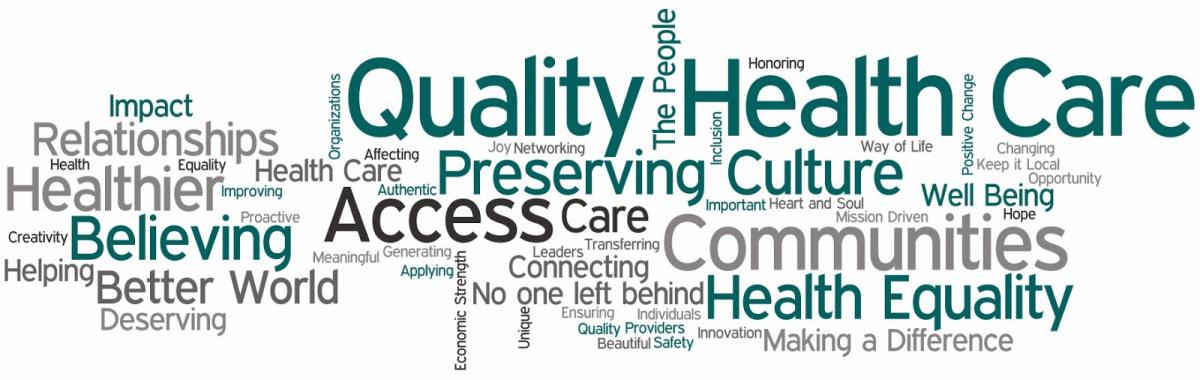
In celebration of National Rural Health Day 2013, staff members at National Rural Health Resource Center created this Wordle in response to the question "What does working with rural health mean to you?"

Tuesday, November 12, 2013

Community: What's in it for us?

Dennis Berens, Board Member, National Rural Health Resource Center


Community is one of those words in our language that is used so often and in so many ways it may not have meaning for us today. So many definitions, so much myth, so much emotion. What's in it for me and you? With four generations alive and operating in our country today, I think this word and its definition could serve as the missing link in our words and actions.

Think about your present definition of community and how many "communities" you live in. I grew up on a farm that was a community. I had ties to a very small town, and there were a number of communities there for me. In the city where I live today, some of my neighbors help me create community. Where else do we find community? Church? State? School? Work?

Those of you who know me have heard me say that community exists among people who are willing to risk for each other. On a ten point scale, you and I must be willing to risk at least at level one for us to be in community. 

For me this definition hits one of the crucial elements in humankind: TRUST. If we will not risk for someone, can we be in a trust relationship? In today's world of instantaneous communication, whom do you trust? And if you cannot trust, can you do business? Can you create meaningful organizations and policies without trust? Can you have real and meaningful relationships? Can you really have working communities?

Think about this word and your definition of it, and then have a "community" discussion about what it means and how we can use it to create a better world. 

Contact the National Rural Health Resource Center to learn how to effectively engage your community in a meaningful conversation about the value of health.